A logo kit identifies you. A brand system guides you.
A logo kit answers a narrow question: which mark, colors, and fonts should appear? A brand system answers the operational questions that appear every week: what should this campaign mean, which image belongs to us, how direct should the headline be, what stays fixed, what can change, and when should an asset be rejected?
| Logo kit | Operational brand kit |
|---|---|
| Logo files and variations | Logo strategy, usage limits, and when imagery should carry recognition instead |
| Color hex codes | Color roles, proportions, contrast rules, seasonal extensions, and banned combinations |
| Font names | Type hierarchy, voice, weight, scale, spacing, and usage by asset type |
| Mood board | Extracted visual principles, image rules, material behavior, light logic, and anti-patterns |
| Sample mockups | Reusable templates, master prompts, production routes, and quality-control checks |
| Static handoff | Governance: who can change what, how new work is evaluated, and how drift is corrected |
The goal is decision compression. A strong kit lets the founder, freelancer, employee, agency, or AI system reach the same family of answers without reopening the entire identity every time someone needs an Instagram post.
The ten parts of a useful AI brand kit
1. The one idea
State the point of view the brand owns in one sentence. It should answer three questions: who are you, who needs to know, and why should they care? Reject any idea a direct competitor could use unchanged.
Weak: “Quality products for modern life.”
Stronger: “Dark roast coffee for people tired of fruit-forward tasting notes and fragile café theater.”
2. Audience and buying context
Define the customer by situation, not demographic wallpaper. What are they trying to accomplish? What embarrasses or frustrates them? What alternative are they using now? What proof reduces the risk of buying?
3. Positioning and proof
List the category, the useful difference, the alternative you replace, and the evidence that supports the claim. This prevents visuals from implying promises the business cannot defend.
4. Color system
Assign jobs to colors: dominant field, text, accent, utility, warning, and seasonal extension. Include contrast rules and approximate proportions. A palette without roles creates seven equally loud colors wrestling in a small rectangle.
5. Typography system
Define headline voice, supporting voice, body type, numeric treatment, hierarchy, and fallback fonts. Include rules for social graphics, web pages, menus, print, and text inside generated images.
6. Image direction
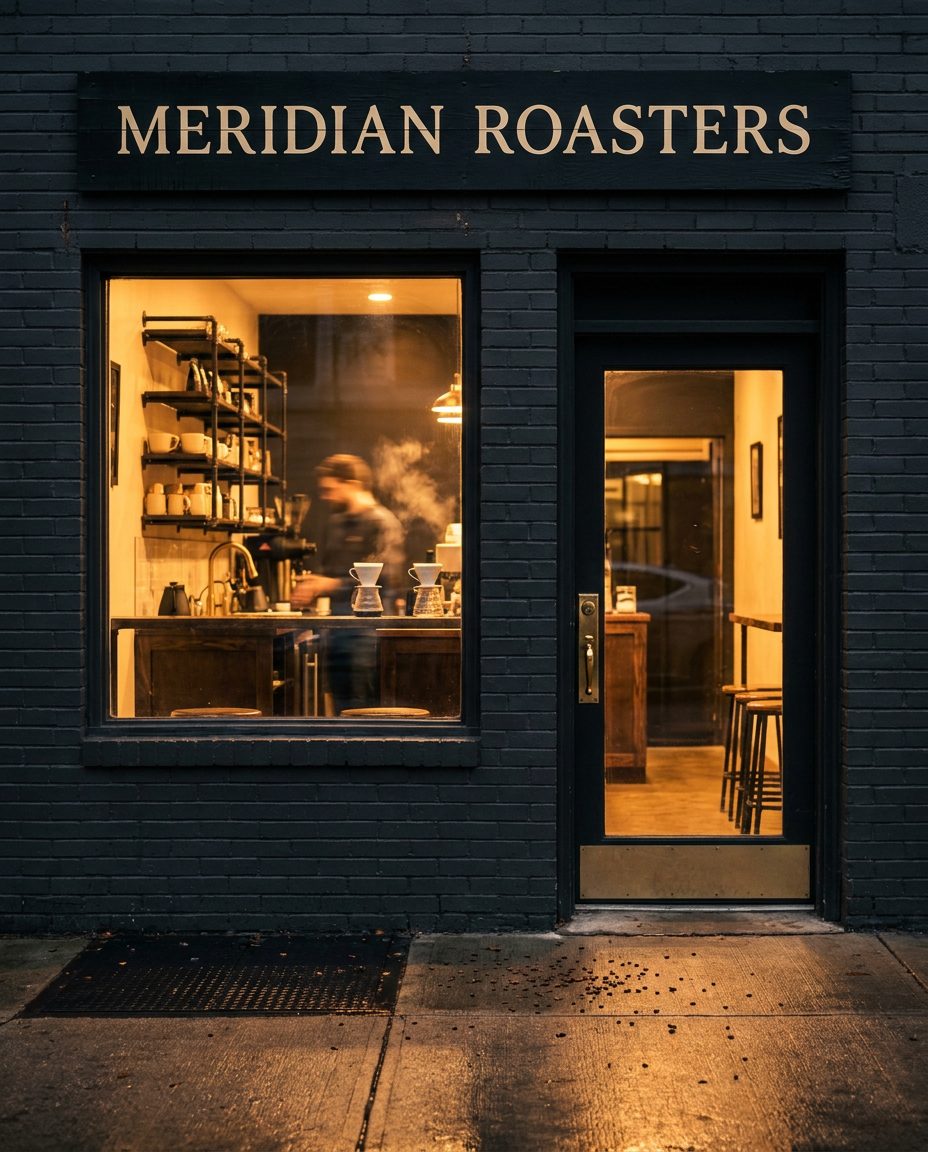
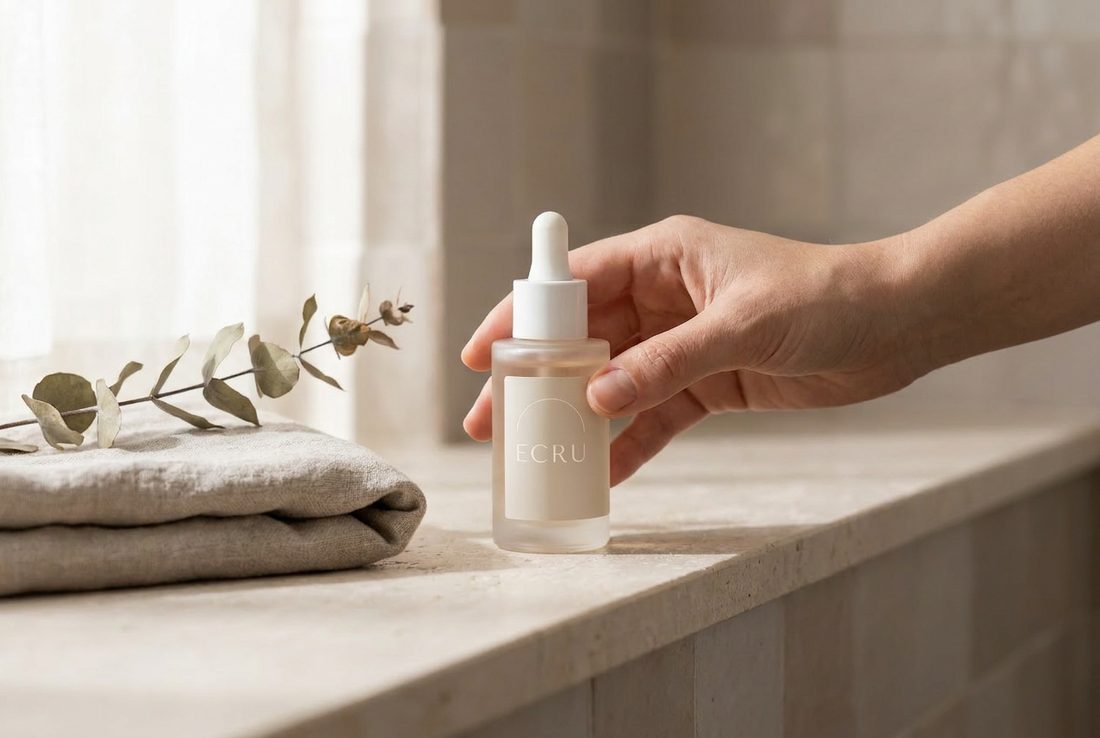
Specify subject treatment, camera position, lens behavior, lighting, palette, materials, composition, human presence, motion, imperfection, and post-production. Add explicit anti-patterns such as universal gloss, generic luxury props, excessive blur, or empty gradients.
7. Voice and message hierarchy
Document what the brand sounds like, what it refuses to sound like, common sentence shapes, vocabulary, proof language, calls to action, and claims that require verification. Add examples for headlines, captions, product descriptions, and customer support.
8. Layout and composition rules
Define grids, margins, text zones, visual hierarchy, logo placement, crop behavior, and CTA positions. Give recurring assets stable templates, but preserve enough variation that the feed does not resemble a municipal form packet.
9. Prompt DNA and master examples
Translate the system into reusable language for image and text models. Store the protected truths, visual constants, negative rules, production routes, and two or three approved examples. Examples often teach consistency better than another page of adjectives.
10. Governance and quality control
State who approves changes, what requires a real photographer or designer, how often the system is reviewed, and what tests every asset must pass. A brand kit without governance becomes a historical document commemorating the day everyone briefly agreed.
What AI should and should not decide
AI is useful for structured exploration, synthesis, variations, prompt translation, templates, and testing. It is weaker when asked to invent business truth, legal claims, customer evidence, or permanent identity decisions without context.
| Let AI help with | Do not delegate blindly |
|---|---|
| Interviewing the founder one question at a time | Choosing a position based only on generic category clichés |
| Extracting principles from reference images | Copying another brand's recognizable surface style |
| Generating several strategic directions | Deciding which promise the business can prove |
| Turning approved choices into templates and prompts | Inventing product facts, credentials, ingredients, or performance claims |
| Stress-testing consistency across asset types | Delivering unreviewed logos, labels, exact copy, or print-ready production files |
The best process is interview first, generate second. The interview captures the founder's actual constraints and taste. The system then explores within those boundaries instead of producing the median identity for “modern wellness brand.”
Prompt DNA: the layer most kits omit
A traditional brand guide tells humans what to do. An AI-ready brand guide also gives models compact, reusable instructions that survive across sessions and asset types.
BRAND IDEA
The specific point of view every visual should reinforce.

PROTECTED TRUTHS
Product facts, marks, colors, proportions, people, places, and claims that cannot drift.

VISUAL CONSTANTS
Camera, light, palette roles, materials, composition, texture, typography, and motion.

CONTROLLED VARIABLES
What may change by campaign, season, channel, or product.

TASTE ANCHORS
Named references plus the principles extracted from each. Never instructions to copy.

ANTI-PATTERNS
The visual and verbal clichés the brand rejects.

PRODUCTION ROUTER
When to generate, enhance, composite, typeset, photograph, or hand off.

MASTER EXAMPLES
Two or three approved outputs with a note explaining why they belong.
This is not a universal mega-prompt. It is a compact state document. Reuse it, update it when the strategy changes, and keep approved examples beside it. That prevents the brand from being reinvented by whichever model happens to answer most enthusiastically that afternoon.
How to test whether the kit works
Do not judge the system by one hero mockup. Test it against three very different jobs.
- Hero test: create the most expressive campaign image the brand needs.
- Utility test: create a plain product card, menu item, announcement, or service graphic.
- Adversarial test: create an asset in a format that usually makes the brand generic, such as a sale post or hiring flyer.
The system passes when all three feel related without being identical. It fails when the hero looks sophisticated but the utility asset collapses into a template, or when consistency requires pasting the logo at submarine-detection size.
Logo removal test
Hide the logo. Can someone who knows the business still recognize the palette, image logic, composition, type voice, and point of view? If not, the identity depends on a badge rather than a system.
Copyable AI brand-kit brief
Use this as a build specification, whether the work is done in ChatGPT, Gemini, a workshop, or with a human designer.
Build a practical brand operating system for [BUSINESS].

Start with a short interview. Ask one question at a time and infer what can be inferred.
Do not propose visual directions until you understand:
- the customer and buying situation
- the problem and current alternative
- the business's provable difference
- the founder's taste references and dislikes
- the channels and asset types the system must support
- any product, legal, fidelity, or production constraints

Deliver:
1. The one idea
2. Audience and buying context
3. Positioning and proof
4. Color roles and accessibility rules
5. Typography hierarchy and fallbacks
6. Image direction and anti-patterns
7. Voice, message hierarchy, and claim controls
8. Layout, grid, and reusable template rules
9. Prompt DNA plus 10–25 reusable prompts
10. Governance, production routing, and QA checklist

Test the system on one hero asset, one utility asset, and one adversarial asset.
Explain decisions plainly. Do not disguise subjective taste as scientific scoring.
Common questions
Can AI create a complete brand kit?
AI can interview, synthesize, explore directions, document rules, create templates, and generate examples. A complete kit still requires truthful business inputs, human selection, legal and claim review, and production checks for logos, exact typography, packaging, and print.
What is the difference between an AI brand generator and an AI brand system?
A generator usually returns identity assets from a short form. A system captures strategy and constraints, then governs future photos, posts, campaigns, copy, and templates so new work remains consistent.
Does a small business need a brand kit?
A business needs one when inconsistency is slowing production, weakening recognition, or making every freelancer and employee reinterpret the brand. The kit can stay compact, but it should document the decisions that recur.
How much should a small-business brand kit cost?
Cost depends on research, strategy, original identity design, revisions, applications, and production files. A self-serve AI system is a lower-cost operating layer, not a substitute for every naming, trademark, packaging, or custom identity engagement.
Not sure whether the real issue is branding?
Take the free visual audit. It separates brand drift from photography, AI realism, missing foundations, and content-volume problems before you buy another logo-shaped object.